
The Sound of Rebellion: How Rock Became a Voice for Social Change
11 months ago · Updated 10 months ago

Introduction: Rock as a Revolutionary Sound
- Introduction: Rock as a Revolutionary Sound
- 1. The Roots of Rebellion: Early Protest in Rock
- 2. The 1960s: The Decade that Defined Protest Music
- 3. From Woodstock to Punk: Expanding the Message
- 4. The 1980s: Political Resistance and Global Awareness
- 5. Grunge, Rage, and the Revival of Social Anger
- 6. Modern Rock Activism: Voices in the Digital Age
- 7. The Enduring Impact of Rock as Protest
- Rock’s Legacy of Resistance
From its birth in the 1950s, rock music has carried an undeniable spirit of rebellion. What began as an energetic fusion of rhythm and blues, country, and gospel quickly evolved into something more: a cultural movement that gave voice to those who refused to stay silent.
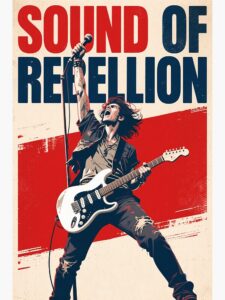
Throughout history, rock has been more than entertainment—it has been a weapon of expression. It challenged authority, broke social taboos, and unified people under a shared sense of defiance. The phrase “The Sound of Rebellion: How Rock Became a Voice for Social Change” captures this duality perfectly: music as both art and activism.
Rock’s ability to influence minds and inspire movements remains unmatched. Its power lies in emotion—raw, loud, and fearless—and in its timeless message: that the world can be changed through rhythm, words, and unity.
1. The Roots of Rebellion: Early Protest in Rock
In the early days, rock was already controversial. When artists like Elvis Presley shook their hips and defied conservative norms, society reacted with both fascination and fear. Rock was “dangerous” because it empowered youth culture. It represented freedom—sexual, political, and artistic.
By the late 1950s and early 1960s, musicians began to use their fame to question inequality and injustice. Bob Dylan, though often labeled folk, heavily influenced early rock protest songs like “The Times They Are A-Changin’.” Artists such as Joan Baez and The Beatles joined in, merging catchy melodies with bold political statements.
This new genre wasn’t afraid to ask hard questions. It said: if the world is unfair, let’s sing about it—and sing loudly. As The Rock & Roll Hall of Fame notes, this was when rock began its transformation from dance music to cultural force.
2. The 1960s: The Decade that Defined Protest Music
The 1960s were a turning point. Rock music became inseparable from social movements—civil rights, women’s liberation, and opposition to the Vietnam War. Young people were looking for identity, and they found it in amplified guitars and poetic rage.
The rise of psychedelic rock coincided with radical political awareness. Jimi Hendrix, Janis Joplin, and The Doors embodied freedom of thought and resistance against conformity. Songs like “Fortunate Son” by Creedence Clearwater Revival became anthems of anti-war sentiment, exposing hypocrisy and inequality.
Perhaps the most symbolic event was Woodstock (1969), a three-day festival celebrating peace, love, and rebellion. Over 400,000 people gathered not just for music, but for unity and resistance. Woodstock became proof that art could challenge systems and imagine alternatives.
Even mainstream acts like The Beatles evolved politically, moving from pop charm to activism with “Revolution” and “Give Peace a Chance.” As Encyclopaedia Britannica records, this era solidified rock’s role as the universal language of dissent.
3. From Woodstock to Punk: Expanding the Message
In the 1970s, rock matured but didn’t lose its edge. The utopian optimism of the 1960s gave way to frustration over political corruption, war fatigue, and environmental crisis. Artists expressed disillusionment, giving rise to hard rock, metal, and punk—genres that screamed rebellion louder than ever.
Bands like Pink Floyd used concept albums like The Wall to critique education, conformity, and alienation. Meanwhile, Led Zeppelin and Black Sabbath channeled chaos and intensity to reflect the darker side of society. Each distorted riff carried a protest against silence.
Then came punk rock—raw, fast, and politically explosive. Groups like The Clash, Sex Pistols, and Dead Kennedys rejected both commercialism and authority. Their DIY ethos declared that everyone had a voice worth hearing. Punk wasn’t just music; it was a manifesto.
According to Punknews.org, punk’s greatest legacy was its ability to democratize protest. It proved that rebellion didn’t need a stage or a record deal—just conviction, a microphone, and courage.
4. The 1980s: Political Resistance and Global Awareness
The 1980s introduced new battles and new forms of activism. Under conservative governments like Reagan’s America or Thatcher’s Britain, musicians became loud critics of capitalism, nuclear arms, and social inequality.
Rock’s global stage expanded through televised events like Live Aid (1985), organized by Bob Geldof and Midge Ure. The concert raised millions for famine relief in Ethiopia, proving that rock could do more than speak—it could act.
Artists like U2, with songs such as “Sunday Bloody Sunday,” addressed war and human rights, while Bruce Springsteen sang for the working class, blending empathy with storytelling. Meanwhile, Metallica and R.E.M. infused rebellion into both sound and message.
Rock became more global, connecting struggles from apartheid in South Africa to censorship in Eastern Europe.
By the 1990s, commercialism threatened to drown rock’s revolutionary voice. Yet, out of the polished pop scene emerged a raw, emotional response: grunge. Bands like Nirvana, Pearl Jam, and Soundgarden revived the authenticity of rebellion, channeling alienation and anti-establishment angst.
Kurt Cobain’s lyrics spoke for a generation disillusioned by conformity and consumerism. His message was not political in a traditional sense, but profoundly social: a cry for honesty and identity in an artificial world.
Meanwhile, Rage Against the Machine fused metal and rap to attack systemic injustice head-on. Songs like “Killing in the Name” and “Bulls on Parade” turned concerts into political rallies. The band’s explicit activism—anti-corporate, anti-war, anti-racist—revived the spirit of 1960s protest through modern fury.
As the century closed, the rebellious sound of rock had evolved again—louder, sharper, but still committed to giving voice to the voiceless.
6. Modern Rock Activism: Voices in the Digital Age
In the 21st century, rock’s methods changed, but its mission remained. Social media and streaming gave artists new tools to amplify their message. Bands like Imagine Dragons, Greta Van Fleet, and Rise Against continue to tackle themes of inequality, identity, and mental health.
The rise of climate activism and global awareness has inspired a new wave of “eco-rock.” Musicians use tours, collaborations, and digital campaigns to promote sustainability and justice. Platforms like EarthDay.org often partner with artists to connect art with environmental action.
Even beyond the stage, modern rockers advocate for inclusion, LGBTQ+ rights, and democracy. Festivals such as Glastonbury or Lollapalooza have become spaces of dialogue as much as entertainment, where thousands gather not only to celebrate music but to demand change.
Rock’s rebellion may no longer look like a leather jacket or smashed guitar, but its purpose endures: to question power and inspire hope.
7. The Enduring Impact of Rock as Protest
Across decades, rock has proven its ability to echo the world’s struggles. Whether challenging segregation, criticizing war, or exposing hypocrisy, the genre has maintained a rare authenticity. Its message remains simple: silence is complicity.
The power of rock lies not only in its lyrics but in its very sound—the distortion, the volume, the rhythm of resistance. It unites people across borders, transcending language through emotion. No other genre has consistently embodied rebellion as naturally as rock.
From the first guitar riff of “Johnny B. Goode” to the chants of “We’re Not Gonna Take It,” rock’s timeline is an ongoing story of courage, protest, and hope. It continues to evolve, adapting its message to each generation’s fight.
Rock’s Legacy of Resistance
To understand The Sound of Rebellion: How Rock Became a Voice for Social Change is to understand the power of art itself. Rock music has never been just sound; it’s been a revolution disguised as melody. Through rhythm, energy, and raw truth, it has consistently challenged what society accepts as normal.
The next time a guitar solo erupts or a lyric sends chills down your spine, remember: it’s more than entertainment. It’s history speaking through amplifiers. It’s the echo of generations who believed that rebellion could be beautiful—and that music could change the world.
Rock will always be that reminder: that the loudest voice in the room doesn’t belong to power, but to those who dare to sing against it.
You might like...